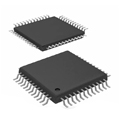
画像は参照用のみです。
ESP8089
IC RF TXRX+MCU WIFI 32VFQFN
- メーカー
- Mfr。パート #ESP8089
- パッケージ 32-QFN
- データシート
- 在庫中7762
100% オリジナル &新しい
出荷の準備ができている24時間
365日の保証
RFQおよびもっと割引を得る
仕様
| Package | Tape & Reel (TR),Cut Tape (CT) |
| ProductStatus | Not For New Designs |
| Type | TxRx + MCU |
| RFFamily/Standard | WiFi |
| Protocol | 802.11b/g/n |
| Frequency | 2.4GHz |
| DataRate(Max) | 54Mbps |
| Power-Output | 18.5dBm |
| Sensitivity | -98dBm |
| SerialInterfaces | SPI, UART |
| GPIO | 2 |
| Voltage-Supply | 3.3V |
| Current-Receiving | 60mA |
| Current-Transmitting | 215mA |
| OperatingTemperature | -40°C ~ 125°C |
| MountingType | Surface Mount |
| Package/Case | 32-VFQFN Exposed Pad |
概要
Description
ESP8089 is a microcontroller module from the ESP family, known for its integrated Wi-Fi capabilities, making it suitable for IoT (Internet of Things) applications. Produced by Espressif Systems, the ESP8089 is designed to be cost-effective while providing robust performance for embedded applications. It is similar to the popular ESP8266 and ESP32 modules but may offer different specifications depending on its targeted use cases and manufacturing batch.
Key features of the ESP8089 include a powerful processor, built-in Wi-Fi connectivity, and support for multiple interfaces such as GPIO, UART, and SPI. This allows it to be integrated into a wide range of devices, connecting them to the internet with minimal additional hardware requirements. The module is typically used in smart home devices, sensor networks, and other connected gadgets requiring efficient network communication.
ESP8089 modules are programmed using languages like C or Python, frequently using frameworks and environments such as the Arduino IDE or MicroPython. Its compact size and energy efficiency also make it suitable for battery-powered applications. However, for specific technical details and applications, consulting the module's datasheet or Espressif’s documentation is recommended.
Features
The ESP8089 is a Wi-Fi module developed by Espressif Systems, primarily designed for IoT applications. It shares similarities with the more widely known ESP8266 but is specifically optimized for integration with other devices. Here are some key features:
1. Wi-Fi Compatibility: Supports IEEE 802.11 b/g/n standards, making it compatible with most Wi-Fi networks.
2. Integrated TCP/IP Protocol Stack: Facilitates internet connectivity and network communication.
3. Low Power Consumption: Designed for efficient power usage, supporting sleep modes to extend battery life in portable applications.
4. Compact Size: Offers a small form factor suitable for embedding into various devices.
5. Programmable via AT Commands: Can be controlled using simple AT commands, which simplifies integration with microcontrollers.
6. SPI and SDIO Interfaces: Provides flexible connectivity options with host devices via SPI (Serial Peripheral Interface) or SDIO (Secure Digital Input Output).
7. High Performance: Capable of supporting high transmission rates.
8. Security Features: Includes support for WPA/WPA2 encryption to ensure secure wireless communication.
The ESP8089 is well-suited for applications requiring reliable wireless connectivity with minimal power consumption and space constraints.
Package
The ESP8089 is a Wi-Fi chip commonly used in Internet of Things (IoT) applications. It typically comes in a QFN package, which stands for Quad Flat No-leads, offering a compact form factor suitable for integration into small electronic devices.
Pinout
The ESP8089 is a Wi-Fi SoC (System-on-Chip) developed by Espressif Systems. It is commonly used for applications that require wireless connectivity. The ESP8089 is known for its small form factor and energy efficiency, making it suitable for IoT applications.
In terms of pin count, the ESP8089 generally comes in a QFN package with 32 pins. These pins serve various functions necessary for Wi-Fi connectivity and communication with external components. Key functions include:
1. Power Supply Pins: These pins provide the necessary power to the chip.
2. UART Pins: Used for serial communication.
3. SPI/SDIO Interface: Supports SPI or SDIO interface for data exchange.
4. GPIO Pins: General-purpose input/output pins for interfacing with other devices or sensors.
5. RF Pins: Used for the antenna connection for Wi-Fi communication.
6. Clock Pins: Provide clock signals necessary for the device's operation.
7. Reset and Enable Pins: Used to reset or enable the chip's functionality.
These essential functions make the ESP8089 suitable for integration into a variety of wireless applications.
Manufacturer
The ESP8089 is manufactured by Espressif Systems, a Chinese company specializing in the design and development of Wi-Fi and Bluetooth low-power IoT solutions. Espressif Systems is known for its ESP8266 and ESP32 series of chips, which are widely used in various Internet of Things (IoT) applications due to their cost-effectiveness and robust performance. The company focuses on wireless communication technologies and has a reputation for providing open-source software development tools and resources to support its hardware products.
Application
The ESP8089 is a low-power Wi-Fi chip commonly used in embedded systems and Internet of Things (IoT) applications. It is typically utilized in smart home devices, wearable electronics, and wireless sensors due to its compact size and efficient energy consumption. Additionally, the ESP8089 is often used in projects requiring wireless connectivity, such as smart appliances, remote monitoring systems, and other consumer electronics that benefit from Wi-Fi communication capabilities.
Equivalent
The ESP8089 chip is a Wi-Fi SoC primarily used for embedded applications. Equivalent products include the ESP8266, which is also a popular Wi-Fi module from Espressif Systems offering similar capabilities. Additionally, the ESP32 series offers enhanced features like Bluetooth connectivity alongside Wi-Fi. Other competing products are the Realtek RTL8710 and the Microchip ATWINC1500, both of which serve similar use cases in IoT and embedded system applications.
出荷
出荷方法私たち
DHL、FedEx、TNT、UPS、またはあなたの選択の他の運送業者を通じてグローバルな出荷サービスを提供します。
出荷料参照(DHL/FedEx):
DHL の: 配送費は25ドル〜45ドル(0.5kg)の範囲で、推定配送時間は2〜5営業日です。
フェデックス: 配送費は25ドル〜40ドル(0.5kg)の範囲で、推定配送時間は3〜7営業日。
UPS の: 配送費は25ドル〜45ドル(0.5kg)の範囲で、推定配送時間は3〜7営業日。
TNT社: 配送費は25ドル〜65ドル(0.5kg)の範囲で、推定配送時間は3〜7営業日。
EMS: 配送料金は30〜50ドル(0.5kg)の範囲で、推定配送時間は7〜15営業日です。
登録航空郵便: 配送費は2〜4ドル(0.1kg)で、推定配送時間は5〜20営業日です。
支払い
Payment Methods
支払い期間は100%前払いです。
現在、下記の支払い方法のみを受け入れています。:
1. ペイパル
2. クレジット・デビットカード
3. ワイヤー 転送
類似
-
![MX25R8035FM1IL0]() MX25R8035FM1IL0
Macronix
-
![MX29F400CBTI-70G]() MX29F400CBTI-70G
Macronix
-
![MX66U1G45GXDI00]() MX66U1G45GXDI00
Macronix
-
![MX25V4035FZUI]() MX25V4035FZUI
Macronix
-
![MX25V2033FM1I]() MX25V2033FM1I
Macronix
-
![MX30LF2G28AD-TI]() MX30LF2G28AD-TI
Macronix
-
![MX25L25673GMI-08G]() MX25L25673GMI-08G
Macronix
-
![MX25L2006EM1I-12G]() MX25L2006EM1I-12G
Macronix
-
![MX25L6433FM2I-08G]() MX25L6433FM2I-08G
Macronix
-
![MX25U6435FM2I-10G]() MX25U6435FM2I-10G
Macronix
-
![MX25U25645GXDI00]() MX25U25645GXDI00
Macronix
-
![MX25L25645GXDI-08G]() MX25L25645GXDI-08..
Macronix