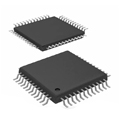
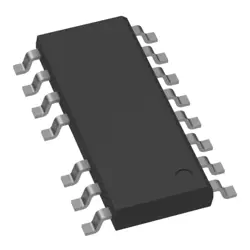
画像は参照用のみです。
ATmega2560
8-bit Microcontrollers - MCU
- メーカー
- Mfr。パート #ATmega2560
- パッケージ
- データシート ATmega2560 DataSheet
- 在庫中20200
100% オリジナル &新しい
出荷の準備ができている24時間
365日の保証
RFQおよびもっと割引を得る
仕様
概要
Description
The ATmega2560 is a microcontroller from the AVR family, developed by Microchip Technology. It features a 16-bit instruction set and is widely used in embedded systems due to its flexibility and performance. The ATmega2560 boasts 256 KB of Flash memory, 8 KB of SRAM, and 4 KB of EEPROM, providing ample storage for programs and data.
Key features include 86 general-purpose I/O pins, 16 analog input channels, and multiple communication interfaces such as UART, SPI, and I2C. It operates at a maximum clock speed of 16 MHz and supports various power-saving modes, making it suitable for battery-powered applications.
The ATmega2560 is commonly found in projects such as robotics, automation, and IoT devices, particularly in the Arduino Mega platform, which simplifies programming and prototyping. Its extensive community support and libraries enhance its accessibility for both beginners and experienced developers. Overall, the ATmega2560 is a versatile microcontroller ideal for a wide range of applications.
Features
The ATmega2560 is a microcontroller from the AVR family, widely used in embedded systems, notably in Arduino Mega boards. Key features include:
1. Memory: 256 KB Flash memory, 8 KB SRAM, and 4 KB EEPROM.
2. Clock Speed: Operates at up to 16 MHz.
3. I/O Pins: 54 digital input/output pins, 16 of which can be used as PWM outputs.
4. Analog Inputs: 16-channel 10-bit ADC.
5. Timers: 6 timers/counters (3 with PWM support).
6. Communication: Supports UART, SPI, and I2C interfaces.
7. Interrupts: 23 programmable external interrupts.
8. Operating Voltage: 1.8 to 5.5V.
9. Low Power Modes: Multiple power-saving modes for energy efficiency.
10. Development Support: Compatible with various IDEs and libraries, making it accessible for hobbyists and professionals.
These features make the ATmega2560 suitable for complex projects requiring numerous I/O operations, communication, and processing capabilities.
Package
The ATmega2560 is commonly available in a 64-pin TQFP (Thin Quad Flat Package) and a 100-pin VQFP (Very Thin Quad Flat Package) configurations. These packages provide multiple GPIO pins for interfacing and are suitable for a range of applications in embedded systems.
Pinout
The ATmega2560 microcontroller has a total of 100 pins. These pins serve various functions, including:
1. Digital I/O: 54 pins can be configured as digital input or output.
2. Analog Inputs: 16 pins are available as analog inputs (ADC).
3. PWM Outputs: 15 pins can be used for Pulse Width Modulation (PWM).
4. Communication Interfaces:
- 4 USART interfaces for serial communication.
- 1 SPI interface for high-speed data transfer.
- 1 I²C interface (TWI) for inter-device communication.
5. External Interrupts: Several pins can be configured to trigger external interrupts.
6. Reset Pin: A dedicated reset pin to restart the microcontroller.
7. Power Supply Pins: Pins for VCC and GND to provide power to the device.
The ATmega2560 is widely used in applications like robotics and embedded systems due to its versatility and extensive functionality.
Manufacturer
The ATmega2560 is manufactured by Microchip Technology Inc., a leading semiconductor company based in the United States. Microchip specializes in designing microcontrollers, microprocessors, and other integrated circuits for various applications, including automotive, industrial, and consumer electronics. The company is known for its focus on embedded systems and offers a wide range of products that cater to developers and engineers in need of reliable and cost-effective solutions. Microchip's acquisition of Atmel in 2016 expanded its portfolio, bringing popular products like the ATmega series, which is widely used in Arduino platforms and other embedded system projects.
Application
The ATmega2560 microcontroller is commonly used in embedded systems for applications such as robotics, home automation, industrial control systems, and data logging. Its large memory and multiple I/O ports make it suitable for projects requiring complex processing, such as 3D printers, CNC machines, and IoT devices. Additionally, it is widely used in educational settings for teaching programming and electronics.
Equivalent
Equivalent products to the ATmega2560 include the ATmega1280, which has similar features but with a lower flash memory capacity. Other alternatives are the Microchip PIC32 series for more advanced applications, and the STM32F family from STMicroelectronics for enhanced performance and peripherals. Additionally, ARM Cortex-M based microcontrollers can serve as substitutes depending on specific project requirements.
出荷
出荷方法私たち
DHL、FedEx、TNT、UPS、またはあなたの選択の他の運送業者を通じてグローバルな出荷サービスを提供します。
出荷料参照(DHL/FedEx):
DHL の: 配送費は25ドル〜45ドル(0.5kg)の範囲で、推定配送時間は2〜5営業日です。
フェデックス: 配送費は25ドル〜40ドル(0.5kg)の範囲で、推定配送時間は3〜7営業日。
UPS の: 配送費は25ドル〜45ドル(0.5kg)の範囲で、推定配送時間は3〜7営業日。
TNT社: 配送費は25ドル〜65ドル(0.5kg)の範囲で、推定配送時間は3〜7営業日。
EMS: 配送料金は30〜50ドル(0.5kg)の範囲で、推定配送時間は7〜15営業日です。
登録航空郵便: 配送費は2〜4ドル(0.1kg)で、推定配送時間は5〜20営業日です。
支払い
Payment Methods
支払い期間は100%前払いです。
現在、下記の支払い方法のみを受け入れています。:
1. ペイパル
2. クレジット・デビットカード
3. ワイヤー 転送
類似
-
![MX29F400CBTI-70G]() MX29F400CBTI-70G
Macronix
-
![MX66U1G45GXDI00]() MX66U1G45GXDI00
Macronix
-
![MX25V2033FM1I]() MX25V2033FM1I
Macronix
-
![MX25V16066M1I02]() MX25V16066M1I02
Macronix
-
![MX25R6435FBDIL0]() MX25R6435FBDIL0
Macronix
-
![MX25L2006EM1I-12G]() MX25L2006EM1I-12G
Macronix
-
![MX25L12833FM2I-10G]() MX25L12833FM2I-10..
Macronix
-
![MX25L12833FZNI-10G]() MX25L12833FZNI-10..
Macronix
-
![MX29F040CQI-70G]() MX29F040CQI-70G
Macronix
-
![MX29F800CBTI-70G]() MX29F800CBTI-70G
Macronix
-
![MX29LV640ETTI-70G]() MX29LV640ETTI-70G
Macronix
-
![MX25L25735FMI-10G]() MX25L25735FMI-10G
Macronix